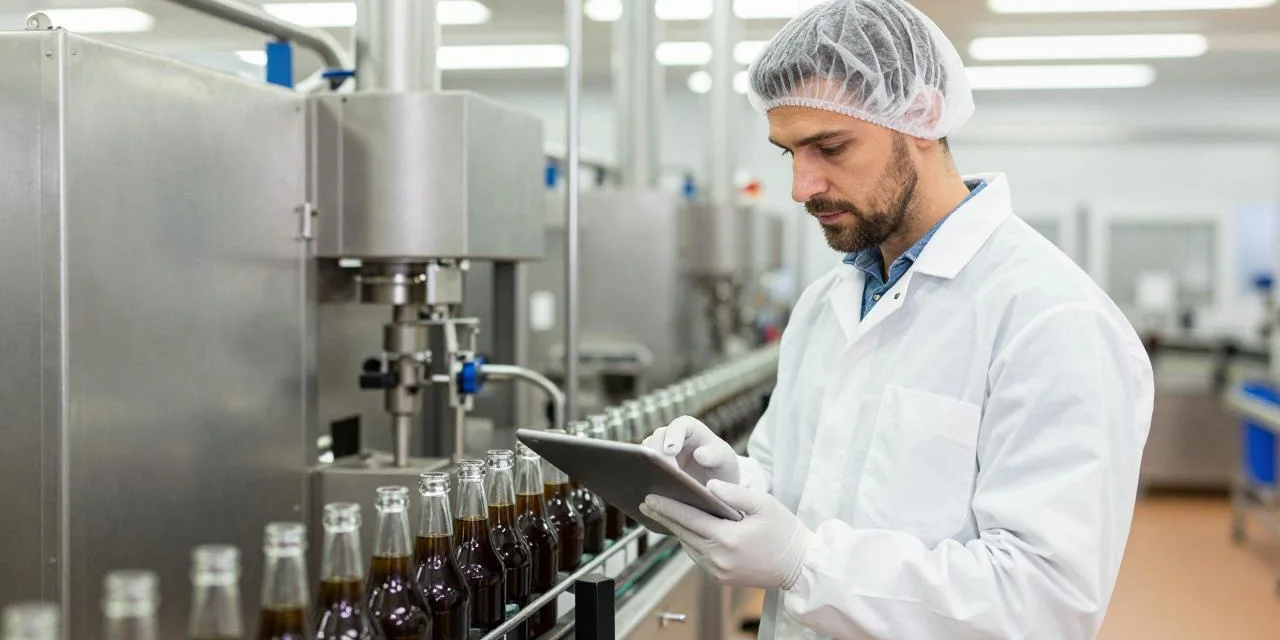
Employee with a tablet at the filling line, in hygiene clothing with a hairnet.
LOKI in food production

AI for food production, without your recipes leaving the building.

LOKI runs completely locally on your hardware. It finds specifications, batch records, lab results and approvals in one go. Every answer comes with its source.

Batch 240817: what all has lot L-4211 in it, and where did that ship out to?

LOKI

The lot is in three batches from line 2 [1]. Lab results for all three are on file and show no findings [2]. Deliveries went to two retail customers and one wholesaler; the delivery notes with dates and quantities are on file [3].

3 sources used Batch record · ERPLab results · LIMSDelivery notes
0 recipes in someone else’s cloud
hours traceability in both directions, required by IFS and tested in the audit
unlimited users in the license. QA, lab, production, inside sales
4 weeks to go live, with no intervention in running production systems

Selected customers

From family-run businesses to DAX corporations. Machine building, chemicals, and the public sector.

The stakes

This data must never leave your building.

Protection status, customer contracts and audits hang on it.

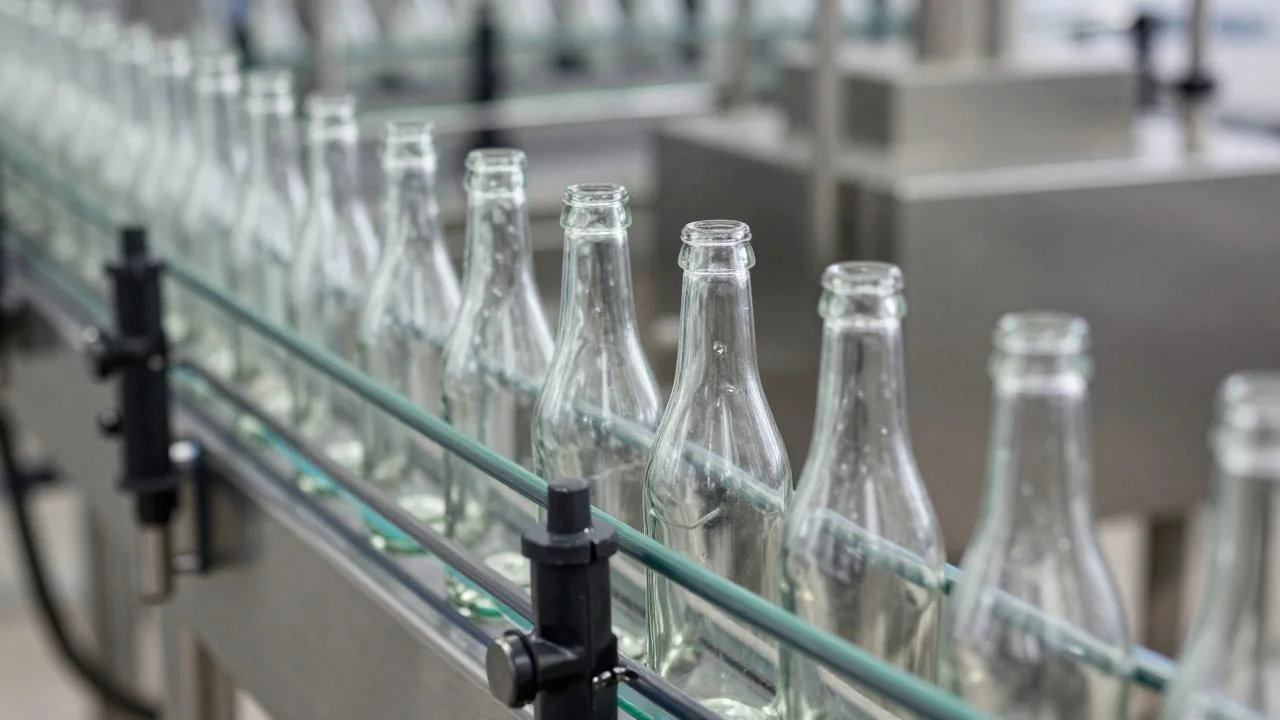
Filling line: glass bottles moving along the conveyor.
Recipe, parameters, batch: a manufacturer’s core know-how. It is legally protected only as long as it stays secret.

Recipes and process parameters

A recipe is legally protected only for as long as it is subject to appropriate confidentiality measures. Entering it into a third-party service risks more than the data flowing out: it risks the protection status itself.

Retail-customer specifications

With private labels, the retailer owns the brand, and the specification is their property. If you fill for several competing chains, you carry a contractual risk that goes beyond a pure data-privacy issue.

Batch and analysis data

Traceability is a KO requirement in the IFS audit and must be demonstrable in both directions within four hours. That evidence must belong to you.

The bottleneck

There is no audit preparation anymore. Only constant readiness.

  1. Four of ten KO requirements are document processes

    Under IFS Food, the customer agreement, raw-material specifications, traceability and the recall procedure are KO requirements. A D rating on any one of them costs 50 percent of the total score. Four of the ten make-or-break questions of an audit hang on whether documents can be found.

  2. An 18-week window instead of a prep week

    Every third IFS audit must be unannounced, within a window from 16 weeks before to 2 weeks after the due date. Refuse the auditor access and you lose the certificate within two working days and get invoiced for the audit costs.

  3. Every recipe change triggers a cascade

    Update the finished-product specification, bring raw materials, process and packaging in line, check labeling against the law of every destination country, validate nutrition values and claims across shelf life, release the label, update retail specifications and master data, recalculate the Nutri-Score. A raw-material change is never just a raw-material change.

  4. 233 days until the position is filled again

    That is how long a position in the food industry stays vacant on average, and the trend is rising. A person-to-person handover structurally fails at that duration: almost a full working year lies between departure and replacement.

The knowledge is in the building. It just sits in the ERP, the lab system, specification PDFs, label approvals and the inboxes of QA and sales all at the same time.

The solution

Four worlds, one question.

Your knowledge sits in four worlds that don’t know each other: batches in the ERP, results in the lab system, specifications as PDFs, approvals in the inbox. Only 39 percent of ERP users get end-to-end traceability out of their system. LOKI puts one search across all four: on your hardware, with a source for every answer.

  1. 01

    Four worlds that don’t know each other

    Batch record, lab result, specification PDF, mail thread.

  2. 02

    One index, behind your firewall

    LOKI opens up all four, following your role-based access.

  3. 03

    One question, in plain language

    No system knowledge, no file names, no folder hunting.

  4. 04

    One answer, with the source

    Every statement carries the source it came from.

Your building · Your hardware ERP Batches CSB · SAP · Dynamics Lab LIMS results LabWare · fp-LIMS QA Specifications Retail PDFs · HACCP Inbox Mail history QA · Sales · Purchasing LOKI One index on your hardware Answer With sources [1] [2] [3]

One question. Four systems. One answer that tells you where it knows it from.

Thursday, 9:10 a.m. The audit arrives unannounced, the traceability test begins. The four hours are running.

Batch 240817: what all has lot L-4211 in it, and where did that ship out to?

LOKI

The lot is in three batches from line 2 [1]. Lab results for all three are on file and show no findings [2]. Deliveries went to two retail customers and one wholesaler; the delivery notes with dates and quantities are on file [3].

3 sources used Batch record · ERPLab results · LIMSDelivery notes

Gathering everything is the part that takes longest today. That part gets short.

Compliance filter

Use external AI. Without data leaving the building.

Your team wants to work with the best models, and does so anyway, if need be around the official toolbox. LOKI turns that into an official path: you connect external models, and every request passes through a check first. Names, order numbers, part identifiers and amounts are detected and redacted before the prompt leaves the building.

What happens to your question before it goes out
Cloud model active. Whatever goes out now leaves the building.

Which allergens have to go on the label for recipe R-2043[RECIPE]? It contains 12.5 % fruit content[QUANTITY] and flavor A-118[RAW MATERIAL].

Checking 3 found

Protokoll14:38 · M. Vogt · Claude Opus 4.8 · 3 findings redacted · sent

Detect

Name recognition and configurable patterns find what must not go out.

Decide

The user sees in the chat what was found and chooses: send anonymized, send unchanged, or cancel.

Prove

Every call is in the log, with user, model, time and the result of the check. Including the cancelled ones.

And this is what the switch looks like in the product: choose a cloud model and it tells you right above the input field.

That’s the difference between a ban that gets bypassed and a path you’re allowed to take.

Compliance

The regulators have already described this architecture.

We don’t have to vouch for the architecture ourselves. The conference of Germany’s data-protection authorities (DSK) described it before we built it.

Architecture

Technically closed

The DSK’s guidance on AI and data protection states that technically closed systems are preferable from a data-protection perspective: in open systems, the input data leaves the users’ protected environment. With LOKI it doesn’t.

Permissions

Where they technically work

Inside a language model itself there is no way to control who may see which information; the supervisory authorities state this explicitly. In the knowledge system in front of it, tenant separation and role-based access do work. That’s why LOKI is built this way. And that’s why individual entries can be deleted deliberately instead of disappearing into a model.

Regulation

IFS, HACCP and the evidence chains of retail and authorities

Under IFS Food, the customer agreement, raw-material specifications, traceability and the recall procedure are KO requirements; a D rating costs half the total score. Add the HACCP documentation, traceability under Article 18 of Regulation (EC) 178/2002 and the allergen and declaration duties of the LMIV. For mineral and table water the German Mineral and Table Water Ordinance applies on top, for medicinal water the authorization under the German Medicinal Products Act. LOKI opens up these evidence chains without a single document leaving your building.

The regulators call this a mitigating measure, not a blanket solution, and name open questions around transparency and data-subject rights. We put it exactly the same way.

Data sources

We collect the knowledge where it already lives.

Without you changing your system landscape.

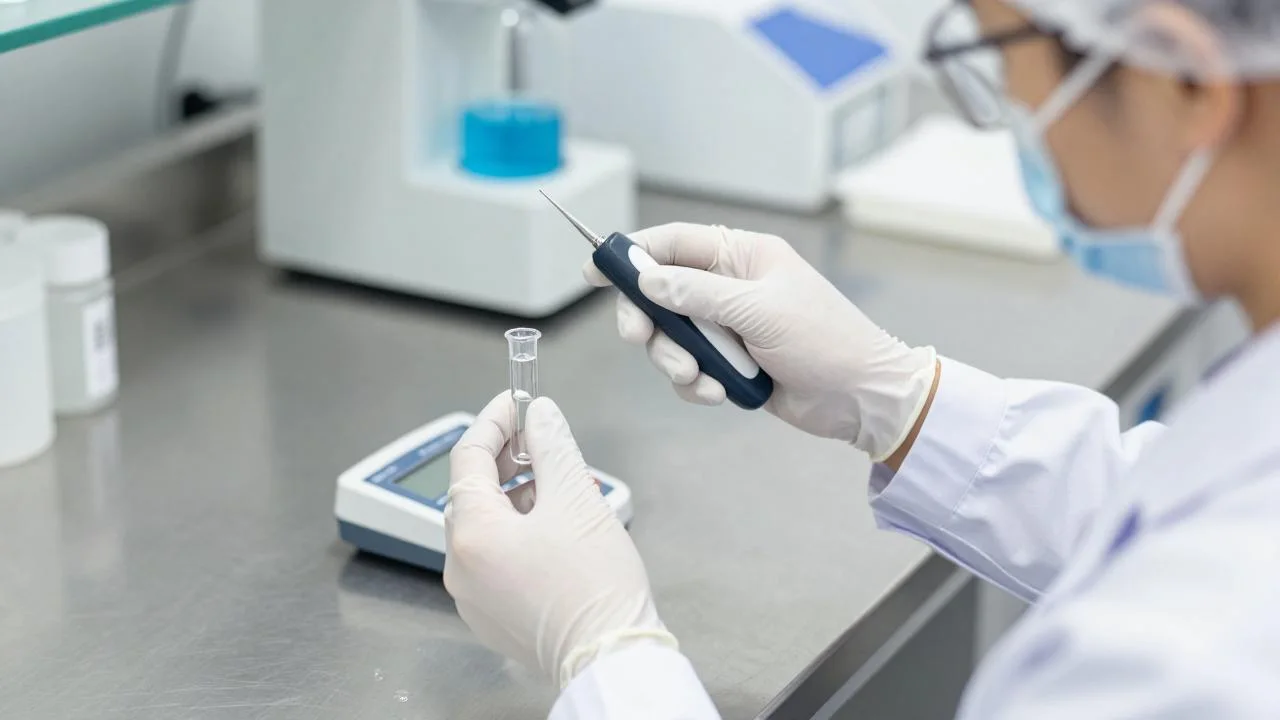
Quality control in the lab: a sample is checked against the specification.
What the lab measures sits in the LIMS. What it means often sits in an email next to it. LOKI finds both.
ERP with industry focus
CSB-System, SAP with food add-ons, Microsoft Dynamics with Aptean or Foodware, GUS-OS, Infor — batches, recipes, traceability
Beverage ERP
COPA drink.PRO, ORGA-SOFT INTEGRA, GRS, Aptean — including empties and deposit balances
Lab / LIMS
LabWare, LabVantage, SampleManager, fp-LIMS — and the Excel files next to them
MES and line
MPDV HYDRA X, Siemens Opcenter, Krones LDS, KHS Innoline
Recipe & specification
Devex PLM, SpecPage, TraceGains — plus the specification PDFs of your retail customers
Labels & artwork
Esko WebCenter, Loftware, Bluhm Weber — approval states and version history
QA & documents
orgavision, roXtra, ConSense, BabtecQ, DocuWare — HACCP plans, procedural instructions, audit reports
Communication
inboxes of QA, inside sales and purchasing, complaint correspondence, supplier self-assessments
LOKI replaces none of these systems; they stay in charge. LOKI makes findable what lies between them: emails, scans, approvals, legacy archives.

In daily operations

Three proofs that cost a day today.

Declaration

A raw material changes: what does that set in motion?

LOKI finds every article containing this raw material, the affected allergen and nutrition declarations, the customer specifications that require written approval of the change, and the labels that need to be redone.

The cascade becomes visible before it starts running.

Audit

The complaint history the audit report demands

The IFS report asks for the complaints of the last twelve months: split by consumers, retail and authorities, with the three most frequent causes and the types of foreign bodies. LOKI aggregates that across your systems instead of three colleagues counting for a week.

Data aggregation across twelve months and distributed systems: the textbook case for a knowledge assistant.

Specification

Thousands of pages of retail-customer PDFs, one exact source

Every chain sends its own requirements document, every version replaces the last. LOKI opens up the PDF archives including scans and answers with the exact source: which clause applies, in which version, for which article.

The answer names document and page, verifiable before every customer email.

Also: document the post-audit action plan with implementation evidence · keep supplier ratings and certificate deadlines in view · keep the allergen overview up to date across all recipes · incoming-goods inspection against specification · prepare the traceability and recall test on the twelve-month cycle

What convinced our customers.

  • With our locally installed AI assistant from IGNAITE, our employees can access company knowledge much faster. For example, information from past projects. This enables higher productivity and, above all, more comprehensive knowledge sharing.

    Rainer Braun Managing Director, bonGroup
  • In our collaboration with IGNAITE, we built a practical, high-performance computer-vision solution that has sustainably improved our incoming-materials processes. What particularly convinced us was the structured approach, the deep process understanding, and the ability to translate complex requirements into pragmatic solutions.

    Dr. Philipp Reisert CEO, C.Hafner · Computer vision project
MINERVA boards: hub, node and measurement board side by side.
And when you measure

Where no file exists, MINERVA creates one.

LOKI opens up what was written down. But a lot happens on the line that never makes it into a document: temperatures, pressures, cycle times, cleaning cycles. MINERVA captures them at the machine, with its own boards in your own network, and turns them into sources LOKI can cite.

Extendable with MINERVA

Both products follow the same principles: sovereign, source-based, local. You start with one and add the other when you need it.

How it works

Three steps to sovereign AI.

From order to productive operation in under four weeks — with no intervention in running production systems.

Intro call, 30 minutes

We look at where your records live (ERP, lab system, specification folders, inboxes) and tell you honestly what LOKI can open up from them.

Installation on site

The hardware goes behind your firewall. The standard data connections are hooked up, with no intervention in running production systems.

Onboarding and training

We hand over only once it runs production-ready. The EU AI Act has required you since February 2025 to train your staff in the competent use of AI; we deliver that training.

Frequent questions

What every intro call asks about.

How does LOKI help with the four-hour requirement from IFS 4.18.3?

It shortens the part that takes longest today: gathering everything. Batch links, lab results, delivery notes and customer assignments sit in several systems at most plants; LOKI queries them in one request and names the source for every data point. Responsibility for the test and its documentation stays with you. LOKI delivers the evidence, never the sign-off.

So an AI has access to our recipes. Isn’t that exactly the risk?

The question is fair, and the answer is the reason LOKI exists. The language model runs on your hardware behind your firewall. There is no API call to OpenAI, Anthropic or Google and no training on your data by third parties. You define who may see which documents through roles: the recipe is never automatically visible to everyone in the plant.

Does LOKI replace our QA system or our specification software?

No. Your QA system stays the leading source for processes and approvals, your specification software for recipes and declarations. LOKI puts the search across everything that sits next to them: email threads on deviations, lab findings, customer correspondence, old batch files, audit reports from previous years.

We fill for several retail chains. Does the data stay separated?

Yes, through tenant separation and role-based access. With private labels this is no mere convenience: the retailer owns the brand, and their specification is their property. We set up the separation together with you before the rollout.

Our specifications are PDFs from retail customers, thousands of pages. Can LOKI handle that?

That is the use case it was built for. LOKI opens up PDF archives including scans via text recognition and answers with the exact source. With handwritten entries the hit rate drops; we tell you that up front.

We have 45 employees. Isn’t that too small?

No. Around 70 percent of food businesses in Rhineland-Palatinate have between 20 and 49 employees. Your size is the rule, never the exception. And the documentation burden per head is higher for you than for a corporation with twenty people in QA.

How is it licensed?

A fixed monthly price plus a one-time setup fee that includes the server hardware. The license covers unlimited users. There are three packages that differ in hardware sizing. Operation, maintenance, updates and support are included. We’ll give you the specific price in the intro call.

Other industries

Your industry isn’t here?

The industry pages show LOKI in the everyday work of individual industries. If yours is missing, that only means we haven’t written it up yet.

NEXT STEP

Request an intro call.

30 minutes, an honest assessment. We’re based in Hoppstädten-Weiersbach on the Nahe, and we come to your site. We’ll also tell you if LOKI isn’t the right step for your data situation yet.