
Compliance
Compliance is not a promise.
It is the architecture.
Most AI tools solve data protection contractually: a processing agreement, standard contractual clauses, a data centre in Europe. That can hold, but it remains a promise about data that has already left the building. We solve it structurally: from the sensor on the part to the answer in the chat.
Your audit file
What you get to hold.
An audit is passed with documents. These four come with every project, before the first document is indexed.
- 01
Technical description of the processing
Which data arises at which station, how it is passed on and where it stays. The data flow below is the short version of it.
Records and IT review - 02
Roles-and-rights concept
Which groups exist, where they come from and at which point the check takes effect. Including the query in which the permission acts.
Data protection officers and audit - 03
Overview of the logged contents
What is logged, how long it is kept and who may read it. Separated into operations log and access log.
Works council and audit - 04
Details for records, impact assessment and works agreement
The text blocks you copy into your own documents, with the fields a supervisory authority expects.
Records, DPIA and co-determination
The documents describe the state as delivered. If you later enable external model providers or tools with internet access, we update them.
What this is about
Four claims. This page settles them.
GDPR without third-country transfer
There is no transfer, so there is no debate about standard contractual clauses, Schrems II or the US CLOUD Act.
01Rights down into the index
The permission check sits inside the database query, not in a filter behind it. What someone may not see, they do not find.
02EU AI Act prepared
Source attribution on every answer, a log of every agent step, human approval for critical actions, a documented model version.
03ISO 27001 in progress
We are building the management system along the standard and say exactly that until the certificate is in hand, and nothing else.
04The simplest question first.
Where does a piece of data actually sit while the system thinks about it?
Data flow
Six stations. One boundary.
A measurement on a machine part and a sentence in an engineering report have more in common than it looks. Both are trade secrets, both can be traced to individuals via shift or authorship, and both lose their protection the second they leave the building. So IGNAITE treats them the same.
- 01
Raw signals stay on the probe.
What goes up is not the data stream but what became of it: condensed characteristic values.
- 02
The node has no remote-access door.
A microcontroller without an operating system in the usual sense. What it can do is in its firmware, and we wrote that.
- 03
The hub needs no internet.
An on-site computer where the measurement series come together. A plant without external connectivity is what the system is designed for, not a special case.
- 04
Every passage carries its principals.
Documents, mail and evaluations are split and made searchable on your server, including the list of those allowed to see them.
- 05
The model runs in the same machine.
Open weights on your GPU. It only ever sees passages the person asking is authorised for.
- 06
Every answer carries its sources.
One click opens the cited passage in the original document. Checkable rather than taken on faith.
Your infrastructure MINERVA Probe on the part MINERVA Node near the machine MINERVA Hub in the plant LOKI Index on your server LOKI Model on your GPU LOKI Answer with sources
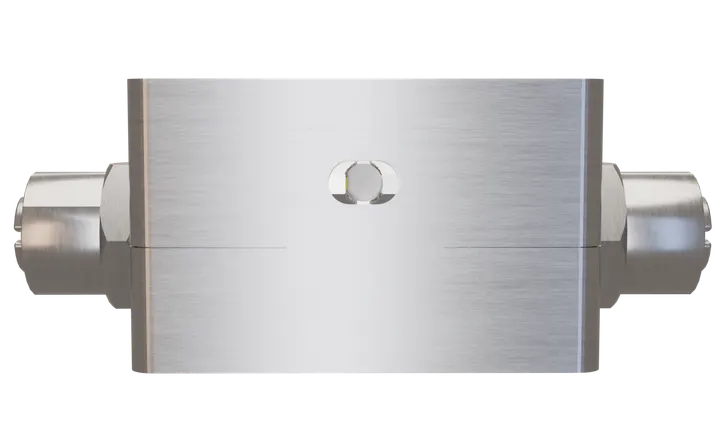
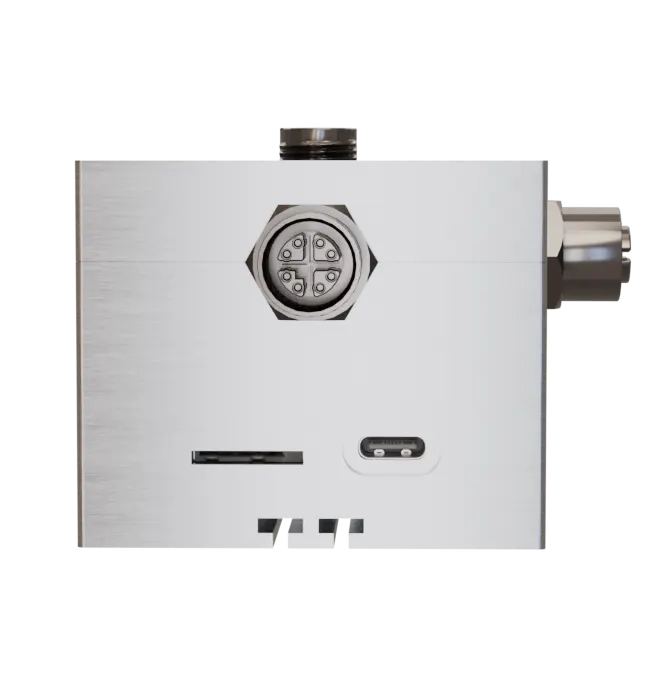
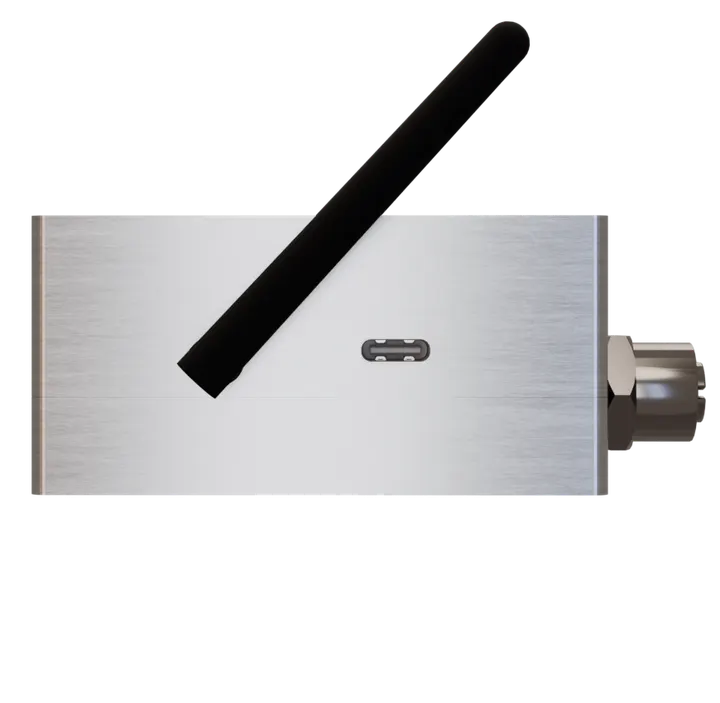
Zero outbound connections in normal operation.1
Access control
What someone may not see, they do not find.
Permissions that only filter the interface are not permissions: the model has already read the content and can summarise, paraphrase or quote it. Here the check sits inside the same database statement that sorts by similarity and picks the best hits. A passage without permission does not sit behind the top results; it is not in the result at all.

The working student
What his group released. Nothing else.
His query carries his list of permissions into the database. A document from the executive board is not badly ranked for him; it is not in the result.

The department head
He gets no answer, because there is no hit.
The model cannot withhold what it never saw. The difference between "must not answer" and "has no basis" is exactly the one that matters in an audit.

A colleague from sales
From your existing groups.
Groups come from Microsoft Entra ID, document rights from SharePoint including inherited folder permissions. Mail and calendar are read with her own delegated rights. She sees nothing she would not already see in Microsoft 365.

The auditor
Yes, without asking us.
Document movements, permission changes and every access to an external model are in the log on your server. We have nothing to hand over, because we hold nothing.
Logs and retention
What gets recorded. And who decides how long.
Your records and works agreement need this overview. It comes with every project; here is the short version.
| Log | What it contains | Retention |
|---|---|---|
| Document movements | Which document entered or left which knowledge base, with the acting person and the time. | You set it |
| Permission changes | Who changed a group or a clearance, when, and what applied before. | You set it |
| Calls to external models | Every call to an enabled external provider, including HEIMDALL’s check result. As delivered this line stays empty, because there are no calls. | You set it |
| Agent runs | Every step of a run, including an aborted one: which source was pulled, which tool was used. | You set it |
| Chat histories | Question, answer and the cited sources. Visible only to the person themselves and to roles you allow to read them. | You set it |
All logs sit on your server. Who may read them is decided by your roles concept, not by us. Deleted means deleted: there is no second copy outside your building from which anything could be restored.
External models
When something does go out.
Some tasks work better with a large cloud model. External providers can be brought in: off by default, enabled in the dashboard, and never without a check. That check is called HEIMDALL, it is built into LOKI, and before every call it reads the complete request: the question and the document passages retrieval attached to it. The second part is the one people overlook. A person’s name rarely leaves in the question; it leaves in the passage sent along with it.
01
Detect
Microsoft Presidio and a locally executed language model for named entities find names, addresses and identifiers. Plus patterns you define yourself: order numbers, part numbers, machine IDs, amounts.
02
Decide
The user sees in the chat what was detected and chooses: send protected, handle locally, or cancel. Or a policy replaces automatically, without asking.
03
Log
Every call is recorded with user, model, timestamp and the outcome of the check, including the ones that were cancelled.
What leaves the building IGNAITE Cloud AI
Your documents and measurement data ✕ ✓
Your questions and prompts ✕ ✓
Usage telemetry ✕ ✓
Licence or activation check ✕ ✓
Update check during operation ✕ ✓
Training data from your holdings ✕ ✓
Six times "no" is not a promise but a property of the construction: there is no code path there. If you enable an external provider, that changes for exactly that one route, and then the filter above applies.
How HEIMDALL replaces sensitive details with placeholders, translates answers back locally and compiles rules from your own policies is covered on its product page.
Explore HEIMDALLDoes a model provider see your names?
Not by default.
By default no provider is connected. If you enable one, HEIMDALL replaces detected names with placeholders. And as soon as a provider outside the EU is involved, third-country transfer applies again. That is exactly why the default is "off".
Deletion
The way back through the same chain.
Access, rectification, erasure: Art. 15 to 17 GDPR apply even when a text has long since been broken into vectors. This is where many systems fail: the document is deleted, its embeddings stay in the index and resurface as hits. Here, removing the vectors is tied directly to the database delete. It also applies when a document disappears not individually but in a bulk delete or along with an entire knowledge base.
File Removed from storage. There is no recycle bin it returns from.
Passages Every passage derived from the document is deleted with it.
Embeddings The vectors disappear from the index, on every deletion path, including bulk and cascading deletes.
Figures Extracted images and tables are removed together with their source.
Permissions The document’s permission edges are cleaned up so no orphaned references remain.
Citations A deleted source can no longer appear in any later answer.
You set the retention periods for chat histories and logs, to match your deletion policy and whatever the works agreement provides for. What is deleted on your server is deleted: there is no cloud instance and no backup on our side that anything returns from.
For meetings, SAGA goes one step further: at the end, if you want, only the minutes remain. Audio, transcript and questions are deleted permanently, without a recycle bin and with a deletion report.
Explore SAGAIn detail
Five questions that come up by the second meeting at the latest.
From here it gets technical and contractual. Anyone skimming the page is done with what came before; anyone auditing will find the answers here at the depth a security review needs.
Open weights. No vendor lock-in.
What we do regulate contractually.
What the works council can see and switch off.
Where no personal data should arise in the first place.
Legal framework
Four frameworks. Four honest answers.
GDPR
Structurally met
The architecture takes the hard questions off the table up front: no third-country transfer (Art. 44 ff.), no processing agreement for the processing itself (Art. 28 applies only to our remote maintenance), technical and organisational measures under Art. 32 on your own infrastructure. Data subject rights under Art. 15 to 17 reach down into the vector index. For the record of processing activities (Art. 30) and any data protection impact assessment (Art. 35) we supply the technical description.
EU AI Act
Built into the product
For high-risk applications the regulation requires logging, technical documentation, human oversight and transparency towards users, among other things. These building blocks are part of the product rather than later add-ons: source attribution on every answer, a log of every agent step, human approval for critical actions, a documented model version. How a specific deployment is classified depends on the use case. You decide that, we supply the evidence.
ISO/IEC 27001
Certification in progress
We are building our information security management system along the standard and are working towards certification. Until the certificate is in hand, we say exactly that and nothing else. What stands today: documented role and permission concepts, logging of every access, a defined patch and update process, disaster recovery. We disclose the current state in the first conversation, including the gaps.
NIS2
Your classification, our input
Many industrial companies fall under the tightened requirements for risk management, reporting channels and supply chain security for the first time. A system that runs without external connectivity, and whose components you can name, is easier to justify here than a service that passes data to a provider. Whether and how you are affected is for your legal team; the technical description for it comes from us.
Common questions
The questions that actually come up.
Do we need a data processing agreement?
Not for the processing itself, because it runs on your hardware without us. Yes for remote maintenance, support and updates; we sign one under Art. 28 GDPR. Anyone who runs the system themselves and switches remote maintenance off does not need that one either.
Will our data end up in model training?
No. There is no technical path there: the model runs locally, it sends nothing back, and we have no access to your content. If you enable an external provider, that provider’s terms apply, which is why the default is "off" and every call is logged.
Can an employee see documents through the AI that they otherwise may not?
No, and that is not a matter of settings. The permission check sits inside the search query against the index: a passage someone is not authorised for does not appear in their result at all. The model never sees it and therefore cannot summarise or quote it either.
How do we get data back out?
Through the dashboard. A deleted document disappears together with its passages, embeddings and figures from the index, including when it is removed in a bulk delete or along with an entire knowledge base. Since there is no second copy outside your server, that deletion is complete.
What happens during an audit?
You access the log on your server. It contains document movements with the acting person and timestamp, permission changes, and every access to an external model along with HEIMDALL’s check result. Every answer additionally carries its sources. For meetings, SAGA’s deletion report records what was deleted, when and by whom. We have nothing to hand over, because we hold nothing.
Can it run without internet?
Yes, completely. Language model, embeddings and reranking are present locally, nothing is fetched at runtime. The sensing in the plant also works without external connectivity, and SAGA recognises speech and drafts minutes on a computer in your building. For support and updates there is remote maintenance that you control and can disable at any time.
Who on your side can access our system?
Only via remote maintenance, only when it is switched on, and every access appears in the log. Without that route there is no way in: there is no back door and no cloud console.
What about the US CLOUD Act?
It applies to providers that process data on your behalf. Since nobody processes your data except you, there is no addressee for a disclosure order.
How does the system know who may see what?
From your existing structures. Groups come from Microsoft Entra ID, document rights from SharePoint including inherited folder permissions, and the rest can be maintained by hand. Mail and calendar are read with the signed-in user’s own permissions.
Is machine data even personal data?
Often yes, and it is underestimated: a measurement with a timestamp can be attributed to a person via the shift roster. So we treat machine data like documents: it stays in the plant, and what goes up are condensed characteristic values rather than the complete data stream.
Will we get the documentation for our own records?
Yes. A technical description of the processing, a list of what the logs contain, the role and permission concept, and the details you need for your processing record, impact assessment and works agreement.
You could throw us out. And everything keeps running.
Open points on your side?
We work through the requirements concretely: with your IT leadership, your data protection officer, your works council, or whoever has the question on their desk. Bring your questionnaire, we will work through it line by line.
- Statements about the data flow refer to the delivered state: no external model providers enabled, no Microsoft 365 connection (SharePoint, Entra ID, Outlook) and no internet-reaching tools (such as web search). If an external model is enabled, HEIMDALL checks that route as described above, and the call is logged.
- Disk encryption and TLS termination sit in your infrastructure. We describe what the system brings along and do not claim to have signed off your operating environment.
- ISO/IEC 27001: certification in progress, not granted at the time of this page. We disclose the current state in the first conversation.