Europe doesn't need its own ChatGPT
Europe is not going to win the race for the biggest AI model. Why specialised models on your own hardware are the better path for industry.
Apple is accused of having lost the AI race because it relies in part on Google’s Gemini. Europe is accused of having lost the AI race against the US and China because it has no frontier model of its own. I find that an interesting parallel.
It gets more interesting when you look at what Apple actually does. Apple isn’t running the race for ever-larger models at all. It is running a different one.
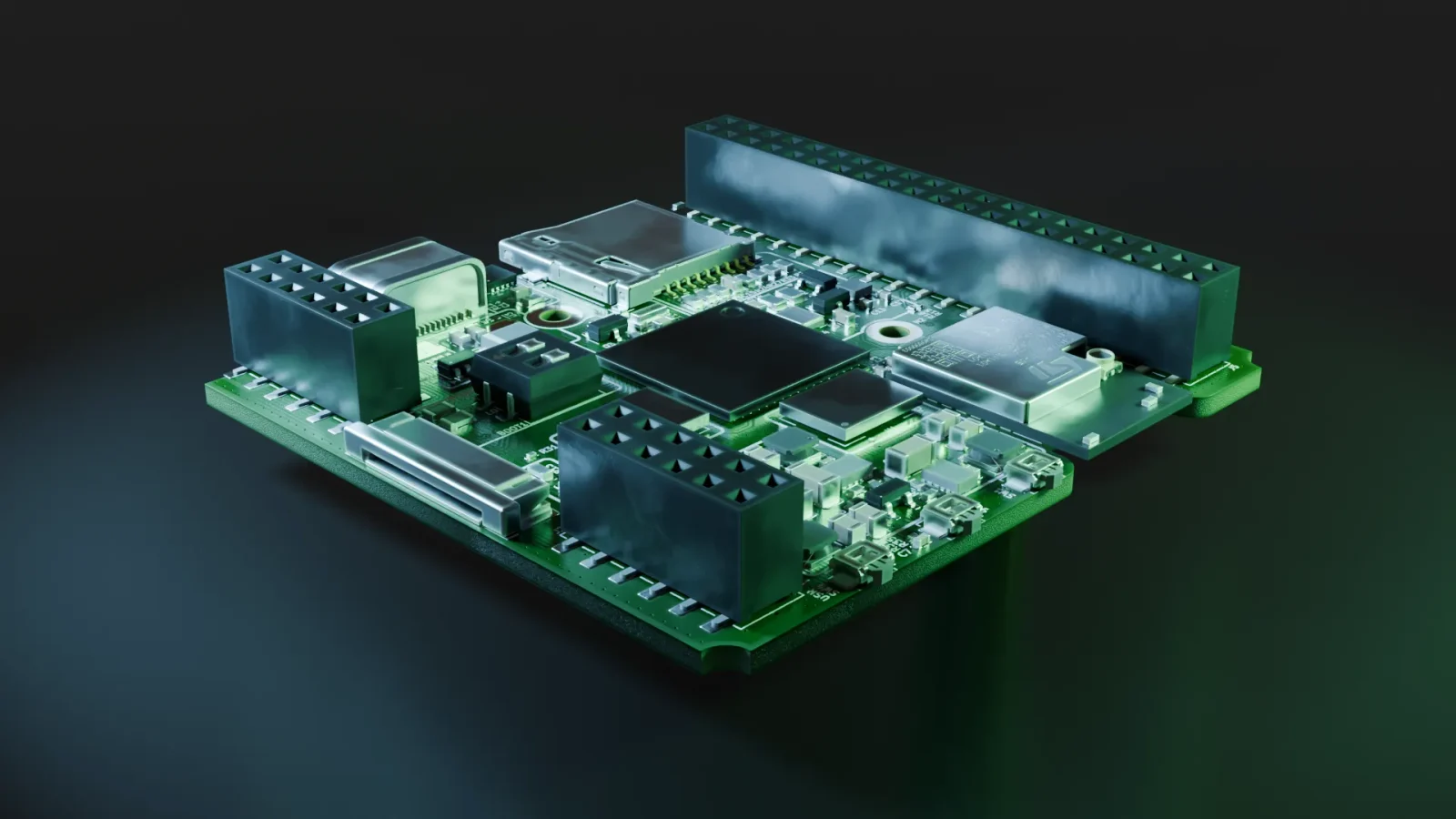
The company has committed to small, efficient models that run directly on the device. They are deeply woven into the surrounding processes, and each is specialised for its particular job. Within their discipline they keep pace with far larger models, at a fraction of the resources. They need no cloud, and control of the data stays with the user.
That is what Europe can learn from.
The wrong race
Europe is not going to win the race for the largest model. The investment sums, the compute capacity and the head start all argue against it, and no further funding programme is going to change that.
But Europe is, above all, an industrial continent. We live from manufacturing, mechanical engineering, chemicals, automotive and pharmaceuticals. Rarely does industry here need a generalist with hundreds of billions of parameters that knows a little about everything. It needs systems that solve one concrete task in one concrete process, reliably.
A model that classifies inspection reports for a particular machine does not need to write poetry. It needs to know the machine.
And in that, Europe has something neither OpenAI nor Google has: decades of deep domain knowledge in industry. Provided we don’t casually hand it over to them.
The installed base is the advantage
Brownfield plants make up roughly 80 per cent of production sites in Germany. Machines that are mechanically robust, run reliably, are well maintained and were written off long ago. Usually without any digital, machine-readable design information.
That tends to get described as being behind. I see it the other way round.
Do these machines have to be scrapped, and do millions have to be invested, when the existing plant runs reliably? In most cases nothing about that adds up technically, commercially or in terms of sustainability. The wish for more insight, better maintainability and more efficient operation is there all the same.
New machines often bring their own sensors and intelligence. But they also mean heavy investment, long transition phases and fresh dependencies on the manufacturer’s ecosystem.
The other route is retrofit. Existing machines keep running and gain new capabilities by becoming measurable. Sensors that pick up vibration, sound, temperature or energy flow give them a sense of their own condition. On top of that comes AI that interprets those signals and makes change visible.
What matters is measuring the right thing, not measuring as much as possible. And evaluating the data where it arises. Close to the machine, without a detour and without being forced into the cloud.
That is how a black box turns, step by step, into a system you can understand, optimise and operate with foresight. At a manageable cost, and with full control over your own data.
The conditions have never been better
Two developments are converging right now. Edge hardware is getting more capable and cheaper, and small models are getting more efficient and better. What needed a data centre three years ago now runs on a device that fits in one hand and draws less power in operation than a desktop workstation.
That shifts the business case fundamentally. Local AI was for a long time the more expensive, more awkward option. You had to justify it on data-protection grounds. That is no longer true. For many industrial applications it is now the cheaper option, and data sovereignty comes along with it.
As for the models themselves, Europe is not as far behind as it is often made out to be. In large language models the US and China have left us behind; that is not in dispute. In models for time-series data, which in industry are often more relevant than language, the picture looks different.
The costliest mistake would be to wait
The current generation of generative AI is impressive but error-prone, and because of its probabilistic nature it is going to stay that way. That is a good reason to deploy it carefully. It is not a good reason to wait.
With Industry 4.0 we spent years founding working groups, signing letters of intent and waiting for the standard that was going to solve everything. We know how that turned out. Anyone waiting for perfection in AI is repeating that mistake with a technology that moves considerably faster.
Pragmatism and speed win. Anyone who is perfectionist and overly cautious loses.
We have to stop running the wrong race. Europe doesn’t need its own ChatGPT. It needs thousands of specialised models running on its own hardware, at a fraction of the cost of large cloud models, protecting the thing that actually makes our industry valuable.
Apple has understood that the bigger model doesn’t always win. Has Europe?
This piece draws together thoughts that first appeared in a series of LinkedIn posts in spring 2026.